
In North Atlanta, “Outdoor Living” isn’t just a buzzword; it’s a lifestyle. Whether you live in Milton’s horse country, a Buckhead estate, or a swim-tennis community in Alpharetta, extending your living space into the backyard is one of the smartest investments you can make.
However, the Georgia climate poses a unique challenge. We have beautiful springs and autumns, but we also face the “Yellow Haze” of pollen season, sweltering July humidity, and aggressive mosquitoes. This leaves many homeowners asking the same question:
“Do I need an open covered porch, a screened-in porch, or a fully conditioned sunroom?”
As a licensed General Contractor serving North Metro Atlanta, Yanover Construction sees this debate daily. The answer isn’t about which structure is “better”—it’s about how you want to live.
In this guide, we break down the three primary types of architectural outdoor structures, the construction requirements for each, and which one offers the best return on investment for your specific property.
1. The Open Covered Porch (The Pavilion)
Best for: Purists who want an unobstructed connection to nature.
An open covered porch (often called a veranda, lanai, or pavilion) is a structure with a solid roof but no walls or screens. It offers shade and rain protection while keeping the sides completely open to the backyard.
The Lifestyle Benefits
As a premier open porch installer in North Atlanta, we often design these spaces for clients who love to grill. Smoke ventilation is easier in an open structure, making it the ideal location for a high-end outdoor kitchen.
- Unobstructed Views: There is no mesh or glass between you and your landscaping / pool.
- Airflow: You get the maximum breeze, perfect for stifling August afternoons.
- Poolside Synergy: These work exceptionally well as freestanding “Cabanas” or pavilions next to a pool.
The Construction Reality
While it looks simple, an open porch requires significant engineering. Because there are no walls to hide the structure, the framing details must be beautiful.
- Columns: To establish a strong visual and structural foundation, stone-wrapped columns or substantial cedar posts (6×6 or 8×8) are often used to ground the design.
- Wind Lift: Without walls, wind can get under the roof. To address this, specialized uplift connections are engineered to keep the roof secure during severe Georgia storms.
The Downside
The obvious drawback is bugs and pollen. In April, your furniture will be covered in yellow dust. In July, mosquitoes may drive you inside after dusk.
Pro Tip: If you choose an open porch, we recommend installing Phantom Screens (retractable motorized screens). These allow you to have an open pavilion during the day and drop the screens at night to keep bugs out.
2. The Custom Screened Porch
Best for: The “Goldilocks” solution for the Georgia Climate.
The screened porch is by far the most popular request we receive. It bridges the gap between indoor comfort and outdoor freshness. It protects you from the sun, rain, and insects, while still allowing you to feel the breeze and hear the birds.
The Design Evolution
Gone are the days of flimsy aluminum frames and sagging screens. Modern custom screened porch construction utilizes architectural materials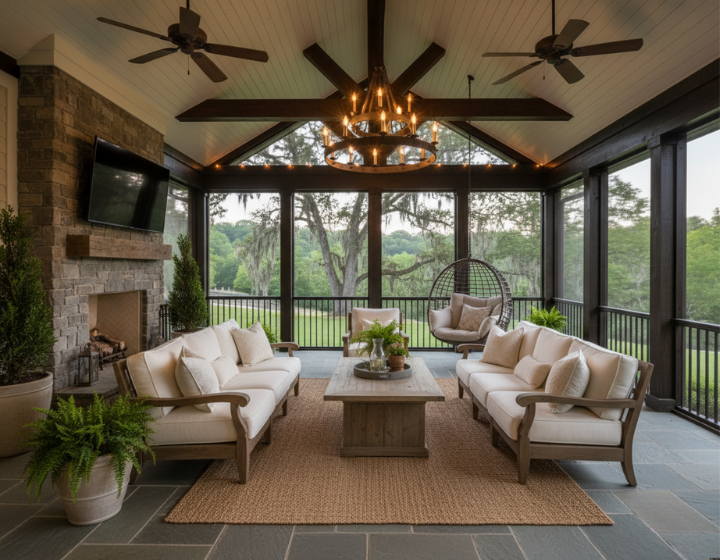 that match your home’s aesthetic.
- Vaulted Ceilings: Framing the structure with cathedral ceilings finished in tongue-and-groove pine or cedar creates a sense of grandeur and volume that flat ceilings cannot match.
- Wide-Span Screening: Advanced architectural screening systems now allow for wide openings without vertical posts, providing panoramic views of the backyard without visual obstructions.
- Flooring: Pairing the porch with composite decking ensures longevity. Unlike pressure-treated wood, composite materials resist warping and splintering, while the gaps between boards allow for necessary drainage if wind-blown rain enters the space.
The “Pollen Room” Myth
A common concern is that a screened porch will become unusable or dirty during pollen season. While standard mesh offers no protection against the yellow haze, installing vinyl-glazed window systems provides a versatile solution. These lightweight, clear vertical-sliding panels mimic the look of glass but offer flexibility. They can be slid closed in April to block the pollen, then opened in May to reveal 75% airflow once the season passes.
Year-Round Usability
A screened porch is technically a “3-Season Room.” It is not insulated. However, with the addition of a full masonry outdoor fireplace and infrared ceiling heaters, you can comfortably watch football on your porch well into December.
3. The Sunroom (4-Season Addition)
Best for: Adding true, appraisable square footage.
A sunroom differs significantly from a porch. In the eyes of the tax assessor and real estate appraisers, a sunroom is Interior Living Space. It has insulated walls, double-paned glass windows, and—most importantly—is connected to your home’s HVAC system.
Why Choose a Sunroom?
- Climate Control: You can set the thermostat to 72 degrees year-round. It is immune to humidity and freezing temperatures.
- Noise Reduction: High-quality windows block out lawnmowers and traffic noise much better than screens.
- Finishes: Because it is weather-sealed, you can use interior-grade finishes like hardwood flooring, drywall, and fine furniture that wouldn’t survive on a porch.
The Investment Difference
As a luxury sunroom builder, we are transparent about costs. A sunroom is a home addition. It requires:
- Foundation Work: Poured concrete footings or a slab (not just deck posts).
- Insulation: Walls and ceiling must meet Georgia Energy Code (R-values).
- HVAC: A mini-split system provides independent heating and cooling without overloading the home’s main HVAC unit.
- Cost: Expect the investment to be 30-50% higher than a screened porch due to the glass, insulation, and HVAC requirements.
Key Design Considerations: The General Contractor Difference
Whether you choose a porch or a sunroom, the difference between a project that looks “tacked on” and one that looks “architectural” lies in the details. At Yanover Construction, we focus on three critical engineering elements often overlooked by simple deck builders.
1. The Roofline Tie-In
This is where most DIY or low-budget projects fail. Simply bolting a shed roof to the side of your house often results in leaks and looks awkward.
We specialize in complex roof integration. This often involves:
- Gables: Building a new gable roof that matches the pitch of your existing home.
- Cricket Installation: Building a small diverter roof (cricket) behind the chimney or roof connection to prevent water from pooling and rotting your siding.
- Shingle Matching: Sourcing shingles that match your current roof perfectly.
2. Impervious Surface & Zoning
Cities like Alpharetta, Milton, and Roswell have strict zoning laws regarding “Impervious Surface Coverage” (how much of your lot is covered by structures that shed water). Adding a roof increases your coverage.
The Yanover Process: We analyze your plat survey before we design. If you are close to the limit, we can engineer solutions to help get your permit approved. You can read more about Alpharetta’s zoning requirements here.
3. Material Selection
For flooring, the industry standard has shifted away from wood.
- Composites: High-performance composite materials like Trex and TimberTech are impervious to rot and termites. In a covered porch environment, they offer a sophisticated, interior-floor look with zero maintenance.
- Ceilings: For porch ceilings, T&G (Tongue and Groove) natural wood (Pine, Cedar, or Cypress) for porch ceilings. It adds warmth and allows for the installation of recessed can lights and heavy ceiling fans.
Hiring a Contractor: The “Turnkey” Advantage
When searching for a “licensed porch builder near me,” it is critical to distinguish between a carpenter and a Design-Build General Contractor.
For high-value properties in The Manor, Windward, or Country Club of the South, you cannot afford a piecemeal approach. You need a turnkey outdoor living contractor who handles every aspect of the build:
- HOA & Permitting: We handle the architectural drawings required for Milton Design Review Board and Alpharetta permitting offices.
- Structural Integrity: We manage the engineering for roof tie-ins so your new addition doesn’t cause leaks in your existing home.
- Trade Management: We coordinate the electricians (for heaters/fans), masons (for fireplaces), and painters.
Don’t risk your home’s value with an unlicensed builder. Yanover Construction provides the comprehensive design-build service required for complex, high-stakes additions.
Where Indoor Comfort Meets Outdoor Living
Design-led home additions that expand outdoor square footage elevate everyday living, creating effortless transitions between interior comfort and open-air relaxation. Thoughtfully designed spaces that blur indoor and outdoor boundaries bring a sense of resort-style living into the home.
Sunrooms introduce light, warmth, and flexibility—offering a refined extension of the home that functions as a true room. Whether styled as a private retreat, creative studio, or casual gathering space, a sunroom delivers year-round comfort with a polished feel.
Screened Porches offer a relaxed yet elevated outdoor experience. With fresh air, natural light, and protection from the elements, they become inviting spaces for entertaining, unwinding, and everyday moments that feel anything but ordinary.
The Verdict: Which Structure Fits Your Lifestyle?
▪ Choose a Sunroom for year-round climate control and increased square footage.
Best for: Home offices, playrooms, or quiet reading retreats.
▪ Choose a Screened Porch for fresh air without the bugs or pollen.
Best for: Family dining, watching TV by the fire, or evening relaxation.
▪ Choose an Open Porch for maximum airflow and unobstructed views.
Best for: Poolside shade, high-end outdoor kitchens, or grilling stations.
Investment Guide: Cost of Luxury Outdoor Living in North Atlanta
One of the most common queries we receive is: “How much does it cost to build a luxury screened porch in North Atlanta?”
According to national data on the cost of outdoor living spaces, comprehensive backyard transformations can range widely, with high-end custom projects often reaching $180,000.
For “buying stage” homeowners in North Fulton, it is important to distinguish between simple repairs and the architectural additions we build.
- Custom Screened Porches: Consistent with industry ranges for new porch construction involving structural roof work, a high-end build in Alpharetta or Milton—featuring a vaulted T&G ceiling, composite flooring, and electrical package—typically ranges from $45,000 to $75,000+.
- Sunroom Additions: Because these require HVAC integration, insulation, and high-performance glass, our pricing aligns with estimates for high-end sunrooms, which generally start at $80,000 and can exceed $150,000 depending on square footage and finishes.
Why the range?
The price driver isn’t just the size; it’s the amenities. Including a full masonry outdoor fireplace, motorized Phantom Screens, or an integrated outdoor kitchen will shift your project from a “standard build” to a “luxury estate addition.”
Ready to Start Your Project?
Don’t let another pollen season or mosquito-filled summer keep you trapped indoors. Whether you envision a grand open pavilion for grilling or a cozy screened retreat for morning coffee, Yanover Construction has the engineering expertise to bring it to life.
We specialize in large-scale Porch & Outdoor Living Projects in Alpharetta, Milton and surrounding communities.
Schedule your on-site design consultation, where we’ll assess your rooflines, review zoning requirements, and design an outdoor space that looks and feels like it’s always belonged to your home.